The Open-Cell Spray Foam Insulation That Makes Old Cleveland Homes Warm and Quiet
It expands up to 100 times its volume, wrapping around wiring and filling every inch of the deep cavities older homes were framed with. The walls get warm. The rooms get quiet.
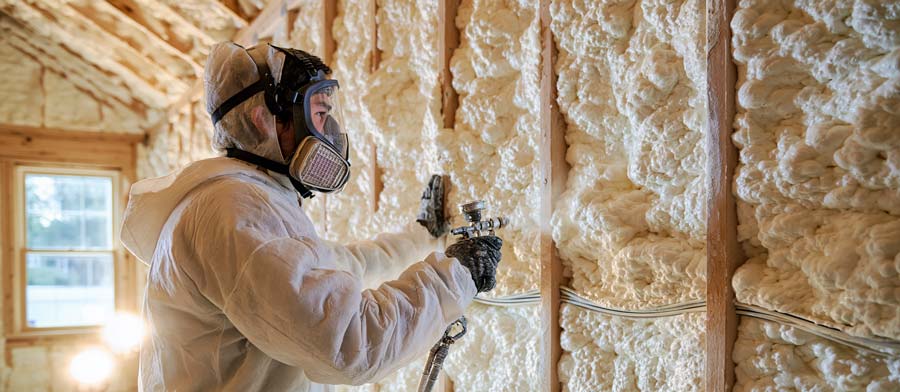
The Foam That Expands 100 Times to Fill a Wall Completely
Cleveland Spray Foam Company reaches for open-cell foam when the job is a deep cavity, a noisy room, or a century home whose walls were framed generously and never filled at all. Open cell spray foam insulation is the workhorse of residential spray foam insulation for a reason: it starts as a liquid and expands up to 100 times its volume, flowing around wiring, plumbing, and blocking until the cavity is completely full. Batts get cut, stuffed, and compressed around obstacles. Open-cell simply doesn’t leave gaps.
- Expands up to 100 times its liquid volume, filling irregular and obstructed cavities that batts can never fit correctly
- R-3.5 to R-3.8 per inch, with the biggest gains coming from the air seal, not the number alone
- Air-impermeable at about 3.5 inches, which means a standard wall depth delivers a genuine air barrier
- Half-pound density stays soft, which is exactly what makes it absorb sound instead of transmitting it
- Vapor-open by design, allowing wall and roof assemblies to dry instead of trapping moisture inside them
Made for the way Cleveland framed its houses
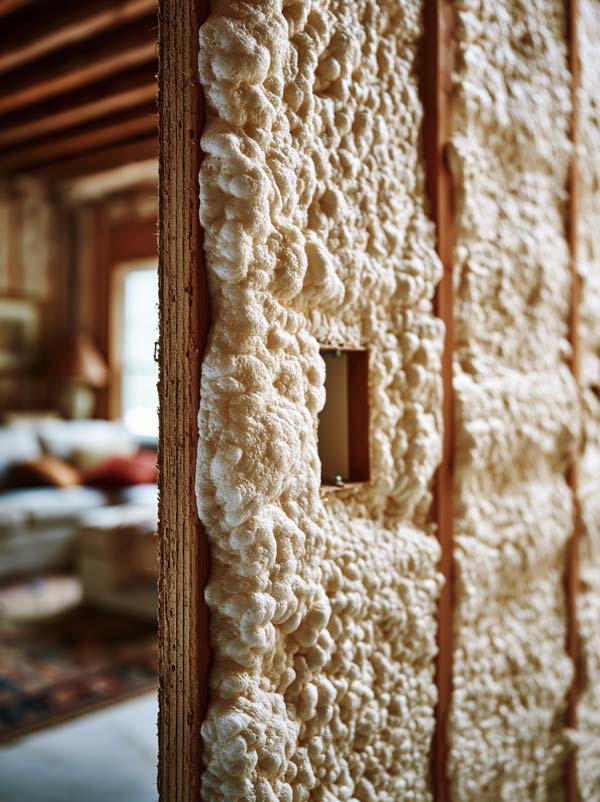
A huge share of this city’s homes went up between the early 1900s and the 1960s: Foursquares, bungalows, craftsman colonials, Cape Cods. Many were balloon-framed with deep, roomy stud bays, and a surprising number of those bays are still empty today. Those generous old cavities are open-cell’s home turf. The foam fills the full depth in one visit, seals the air paths that make old houses feel drafty, and does it without the demolition homeowners fear.
The quiet part
Because open-cell stays soft after it cures, it soaks up sound the way dense materials can’t. Street noise through exterior walls, footsteps between floors, a home office next to the laundry room: this is the foam that turns those complaints into a one-day fix. It’s the reason open-cell shows up in media rooms and bedroom walls even in homes that don’t need another ounce of R-value.
Signs Open-Cell Belongs in Your Walls
✓ Exterior walls that feel cold to the touch by December
✓ Rooms where you hear every passing car, plow, and neighbor
✓ A pre-1960 home whose original wall cavities were never insulated
✓ Upstairs bedrooms that swing hot and cold with the seasons
✓ Wiring and plumbing runs that make batts impossible to fit right
✓ Deep 2×6 walls that deserve better than sagging fiberglass
Vapor-Open on Purpose
Open-cell is not a vapor barrier, and that is not a flaw. It is the reason the material exists. In the right locations, a wall or roof assembly needs to breathe so that any moisture that finds its way in can dry back out instead of accumulating. Open-cell delivers the air seal while leaving that drying path open.
The expertise is in the placement. Interior walls, deep above-grade cavities, and certain roof assemblies want open-cell. Anywhere concrete, soil, or standing humidity is part of the picture, closed-cell takes over. Knowing which foam goes where is most of what separates an insulation job that works in Cleveland from one that only works on paper.
Open-cell by the numbers
01 Expands up to 100 times its volume to fill every gap in the cavity
02 R-3.5 to R-3.8 of insulating value per inch of depth
03 Becomes a full air seal at about 3.5 inches, one standard wall depth
04 Half-pound density that stays soft and absorbs sound for the life of the wall
05 Vapor-open structure that lets the assembly dry instead of trapping moisture
Your Open-Cell Spray Foam Questions Answered
Open-cell is priced by the board foot and costs noticeably less per inch than closed-cell, because it uses far less material to fill the same space. The total depends on cavity depth, square footage, and access, so we quote a firm number after seeing the walls rather than guessing over the phone. The estimate is free, and for deep-cavity older homes open-cell is usually the most cost-effective path to a fully insulated, fully air-sealed wall.
Neither is better; they’re built for different jobs, and many Cleveland homes end up with both. Open-cell wins in deep wall cavities, interior walls, and anywhere sound control matters, because it fills completely and stays vapor-open so the assembly can dry. Closed-cell spray foam insulation wins wherever moisture is part of the problem, like rim joists, basements, and crawl spaces. During the estimate we spec each surface for the foam that actually belongs there.
Yes, and it’s one of the most common reasons Cleveland homeowners ask for it. The same soft, open structure that makes it a poor vapor barrier makes it an excellent sound absorber; it dampens airborne noise through exterior walls and takes the edge off sound traveling between rooms and floors. It won’t turn a bedroom into a recording studio, but the difference on a busy street or above a living room is immediate and obvious.
It can, and in the right assembly it’s an excellent choice, particularly on the underside of the roof deck in an unvented attic where vapor permeability lets the roof sheathing dry. In a Zone 5 climate that design has to be done correctly, with foam depth and vapor management specified for our winters rather than copied from a warm-climate playbook. We cover the full approach on our attic spray foam insulation page, and we spec it house by house during the estimate.
Not when it’s placed correctly, and placement is the entire question. Open-cell passes water vapor, so in Cleveland it belongs in assemblies that are designed to dry and stays out of the places where moisture pressure is relentless, like foundation walls and rim joists. Used that way, its permeability is an asset: any moisture that enters the wall has a way back out. Problems come from putting the wrong foam in the wrong place, which is exactly what a professional spec exists to prevent.
Yes. Open-cell is water-blown, and once it has fully cured it is inert and stable, with no ongoing off-gassing at levels of concern. During installation we ventilate the work area and follow the manufacturer’s re-occupancy window, typically about 24 hours, before the family returns to the treated rooms. Building code also requires a thermal barrier, usually the drywall already on your walls, between foam and living space, and every job we do is installed to that standard.
A full 5.5 inch cavity of open-cell delivers roughly R-19 to R-20, right at the Zone 5 target for wood-frame walls, and it arrives with something the code tables don’t show: a complete air seal across the whole cavity. Because air leakage is one of the biggest sources of heat loss in older homes, a fully filled, fully sealed R-19 wall routinely outperforms a nominally higher R-value wall that leaks. Deeper 2×8 cavities in older homes gain proportionally more.
Get Your FREE Estimate
Tell us which rooms run cold or loud, or what your walls are hiding. We’ll get back to you the same day whenever we can.