Attic spray foam that ends ice dams and high winter bills.
Your attic is where most Cleveland homes lose the most heat. Seal it with spray foam and you stop the ice dams, the drafts, and the runaway bills at the source.
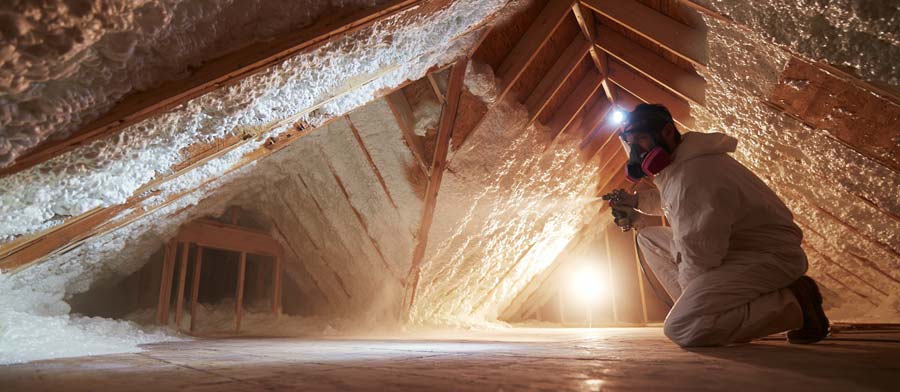
The Biggest Heat Leak in the House Is Right Above You
Cleveland Spray Foam Company starts most whole-home conversations in the attic, because that is where the physics start. Warm air rises, finds every gap in the attic floor, and carries your heating dollars straight through the roof. Attic spray foam insulation closes those gaps and insulates in the same pass, which is why it outperforms simply piling more loose fill on top of a leaky attic plane. Most attic insulation in Cleveland was installed decades ago, has compressed to a fraction of its rated value, and never sealed air in the first place.
- Air sealing and insulation in one material, closing the attic hatches, top plates, and recessed lights that leak the most heated air
- A clear path to the R-49 code target for Zone 5 attics, in less depth than loose fill needs
- Ice dam prevention at the source, by stopping the heat loss that melts the roof snowpack
- Steadier upstairs temperatures, because bedrooms stop trading air with a freezing attic
- One of the fastest payback periods of any insulation upgrade in this climate
How an ice dam actually starts
Cleveland averages more than 63 inches of snow a year, and an ice dam needs only two ingredients: a snow-covered roof and heat escaping into the attic below it. Escaping heat warms the roof deck and melts the snowpack from underneath. The meltwater runs down to the cold eaves, refreezes into a ridge of ice, and every day of melt adds to it. Eventually water pools behind the dam and gets forced up under the shingles, into the roof deck, the wall cavities, and the insulation. The icicles are the visible symptom. The heat loss is the disease, and it is fixable.
Two ways to foam an attic
Some homes want foam and air sealing at the attic floor, keeping the attic cold and dry the way it was designed. Others are better served by foaming the underside of the roof deck to create an unvented, conditioned attic, which is the answer when ductwork or mechanicals live up there. Which assembly is right depends on your roof, your equipment, and your house, and it is one of the first things we work out at the estimate.
Signs Your Attic Needs Spray Foam
✓ Ice dams or icicles along your roofline every winter
✓ Upstairs rooms that never quite warm up
✓ Heating bills that climb faster than they should
✓ Thin, old, or compressed insulation up there now
✓ Drafts you can feel near ceilings and light fixtures
✓ A home built before modern air-sealing was standard
Heat rises, and your attic lets it leave
In a Cleveland winter, warm air pushes up and escapes through every gap in your attic floor and roofline. That does two expensive things at once: it drives your heating bill up, and it warms the underside of your roof, which is exactly how ice dams are born.
Spray foam ends both problems with one installation. Sealed and insulated to the Zone 5 standard, the attic stops bleeding heat, the roof stays cold and dam-free, and the furnace finally gets to cycle like it was designed to.
What a leaky attic costs you
01 Higher heating bills, every single month of winter
02 Ice dams that force water into walls and ceilings
03 Cold upstairs rooms the furnace can’t keep up with
04 Moisture and mold in the attic and insulation
05 A furnace that runs constantly and wears out early
Your Attic Spray Foam Questions Answered
It depends on the size of the attic, the foam type, the assembly we’re building, and whether old insulation needs to come out first. We give a firm price after we see the space, and the estimate is always free. What we can say up front is that attic work tends to have one of the fastest paybacks of any insulation upgrade in this climate, because the attic is where a Cleveland home loses the most heat in the first place.
In almost every case, yes, because it removes the ingredient the dam can’t form without: heat escaping into the attic and warming the roof deck. When the attic plane is sealed and insulated to the Zone 5 standard, the roof stays close to outdoor temperature, the snowpack stops melting from below, and there’s no meltwater to refreeze at the eaves. Extreme freeze-thaw weather can still produce minor icicles on any roof, but the recurring, gutter-wrecking, ceiling-staining dams almost always trace back to attic heat loss, and that’s exactly what the foam eliminates.
Both have a place, and the assembly decides. Open-cell is common on the underside of the roof deck in unvented attics because its vapor permeability lets the sheathing dry, while closed-cell earns its place where headroom is tight, where the roofline needs added rigidity, or at tricky transitions. Many attics get a combination. We spec the material after we’ve looked at your roof, your ventilation, and what lives in the attic, not before.
Ohio’s residential code puts Zone 5 attics at R-49, and plenty of older Cleveland attics are sitting at a fraction of that after decades of settling and compression. Spray foam reaches the target in less depth than loose fill and adds the air seal that R-value numbers alone don’t capture. Because air leakage is a huge share of real-world attic heat loss, a foamed attic at code routinely outperforms a fluffed-up attic that reads the same on paper.
Vented attics with a sealed, insulated floor are the traditional design and still the right answer for many homes. Unvented, conditioned attics, built by foaming the roof deck itself, are the better call when your furnace or ductwork lives up there, since equipment in a freezing attic wastes energy all winter. Done correctly in Zone 5, both are code-compliant and both work; the mistake is copying a warm-climate design without the vapor detailing our winters demand. We walk through the choice at the estimate. You can read more about the roof-deck approach on our open-cell spray foam insulation page.
Often, yes. Old fiberglass or cellulose that’s wet, compressed, moldy, or contaminated by rodents has lost its value and shouldn’t be buried under new work, and foaming the attic floor requires clean access to the gaps being sealed. If the existing material is in genuinely good shape, some assemblies can keep it. We assess that during the estimate, and when removal is needed we handle it as part of the project through our insulation removal service.
Installed correctly, it prevents them. Mold in a Cleveland attic is almost always fed by warm, moist indoor air leaking up through the attic floor and condensing on cold surfaces, and air sealing shuts that delivery route down. Problems attributed to foam come from bad design, usually the wrong foam or the wrong thickness for a cold climate. Every attic we spec is built for Zone 5 conditions, with the vapor behavior of the assembly worked out before a drop of foam is sprayed.

Get Your FREE Estimate
Tell us what’s going on up there or give us a call. We’ll get back to you the same day whenever we can.