Insulation Removal That Clears Out Decades of Damp, Dust, and Whatever Moved In
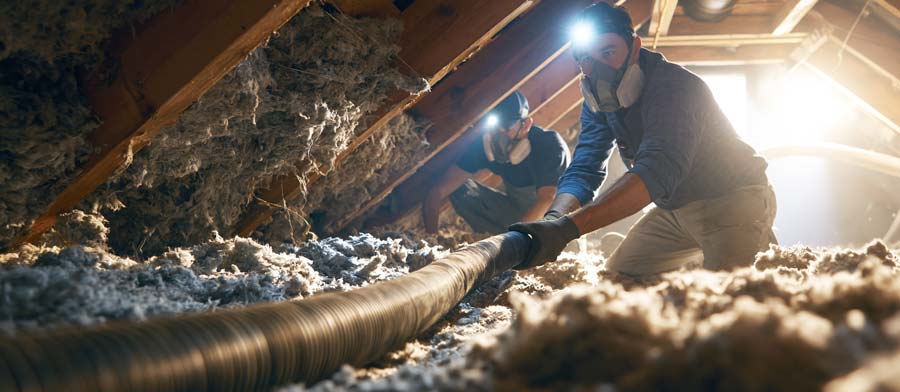
Old fiberglass and cellulose don’t just stop working. They hold onto moisture, odor, and rodent mess right above your ceiling. We vacuum it out, bag it, and haul it away, so whatever comes next starts clean.
You Can't Insulate Over a Moisture or Rodent Problem
Cleveland Spray Foam Company removes the old before installing the new, and it’s a service most people never think about until an inspector, a smell, or a scurrying sound sends them looking for an insulation removal company. Insulation removal earns its place as its own trade for a simple reason: whatever is wrong up there, burying it under fresh material locks the problem in. Most Cleveland attics are carrying insulation installed before 1980, and after that many decades of roof leaks, dust, and pest traffic, a lot of it is doing more harm than nothing at all:
- Wet or compressed fiberglass has already lost the R-value you think you have, and it doesn’t get it back by drying out
- Rodent-contaminated material is an air quality problem, sitting a half inch of drywall above where your family sleeps
- Old cellulose holds moisture and odor long after the leak that soaked it was fixed
- Foam needs bare, sound framing, because air sealing can’t happen through a foot of degraded fill
- Everything gets vacuumed, bagged, sealed, and hauled, not stirred up into the house on the way out
What fifty-year-old insulation is actually holding
Attic air doesn’t stay in the attic. The same bypasses that leak heat upward pull air downward when pressures flip, and your furnace ductwork often runs straight through the material in question. That’s why attics full of droppings, mold-stained batts, and half a century of dust show up in the house as allergies, odor, and air you can’t quite freshen. Removal takes the reservoir away instead of managing it.
How the removal actually works
The work area gets contained at the hatch, the material travels out through a vacuum line rather than through your hallway, and everything leaves in sealed bags. What’s left behind is the most valuable part: a bare deck that can finally be seen. Old leak stains, chewed wiring, open chases, and knob-and-tube circuits all get found at the exact moment they’re cheapest to fix, before anything new goes in on top of them.
Signs the Old Insulation Needs to Come Out
✓ Droppings, tunnels, or nesting in the attic or crawl space
✓ A musty or ammonia smell that’s strongest upstairs
✓ Batts gone flat, matted, or gray with age and dust
✓ Water stains or a past roof leak over the insulated area
✓ Allergies or dust that get worse when the furnace runs
✓ A foam or upgrade quote that calls for a clean deck first
The Step That Makes Every Other Upgrade Honest
Removal is also diagnosis. Nobody, including us, can honestly assess a roof deck, the wiring, or the real condition of your attic through a blanket of old material, and more than one homeowner has paid to insulate over a problem that removal would have exposed for the price of a look. Clearing the deck first means every decision after it is made with open eyes.
That’s why removal is usually chapter one of a bigger story rather than the whole book.
What a clean attic makes possible
01 A foam installation that bonds to bare, sound framing
02 The first honest look at your roof deck, wiring, and old leaks in decades
03 An air quality reset for every room below the ceiling
04 Pest entry points exposed, sealed, and closed for good
05 An accurate quote for whatever comes next, measured off a clean deck
Your Insulation Removal Questions Answered
It’s driven by the square footage, the depth and type of material, how contaminated it is, and how reachable the space is; loose blown-in fill and batts move at different speeds, and rodent-affected jobs include sanitizing that clean jobs don’t. We price it firm after seeing the space, free. When removal is the first phase of an insulation project, it’s quoted as a line item inside the larger job, which is usually the most economical way to have it done.
Yes, and it’s how most of our removal work runs: clear the space, inspect and photograph what the old material was hiding, resolve anything that needs resolving, then seal and insulate on a clean deck, one continuous project with one crew accountable for all of it. It’s the standard sequence for attic spray foam insulation in older homes, where the existing material almost always has to come out for the air sealing to happen at all.
It’s not something to panic over, but it’s not something to live under either. Droppings and urine in insulation create odor and airborne particles in a space your home exchanges air with every day, which is why the smell and the allergy flare-ups tend to show up downstairs. The fix is complete rather than cosmetic: contaminated material out in sealed bags, surfaces treated, and the entry points the animals used found and closed so the story doesn’t repeat.
We stop, and that’s the answer you want to hear. Vermiculite insulation from certain mid-century sources can contain asbestos, and the responsible move is testing by a qualified lab before anyone disturbs it further, with licensed abatement if it comes back positive. It’s not common, but Cleveland’s housing stock is exactly the age where it appears, and any removal company that says they’ll just vacuum it out is telling you something important about the rest of their judgment.
Sometimes, and we’ll tell you straight after a look. Cured foam bonds to what it was sprayed on, so removal is slow mechanical work, cutting and scraping rather than vacuuming, and it makes sense mostly in specific situations: a botched DIY kit job, off-ratio foam with a lingering odor, or foam that has to come off framing for repairs. It’s priced case by case because the situations vary so much, and if removal isn’t the sensible path we’ll say so and lay out the alternatives.
Constantly, because in Cleveland the classic crawl space condition is fallen fiberglass draped over damp soil alongside decades of construction debris, and none of it can stay if the space is going to be sealed. Everything comes out bagged, the space gets cleaned and treated as needed, and the crawl space is ready for lining and foam. It’s the standard first phase of crawl space encapsulation, and we quote the two together whenever encapsulation is the goal.
Most attics clear in a day, larger or heavily contaminated spaces in two, and the mess stays out of your house by design: the hatch area is contained, the material travels through a vacuum line to equipment staged outside, and it leaves in sealed bags rather than armloads through the hallway. Homeowners are usually surprised the house needs nothing more than a quick pass of the vacuum where the ladder stood.

Get Your FREE Estimate
Tell us what’s up there, or what you suspect is. We’ll get back to you the same day whenever we can.