Dry, Sealed, and Warm Underfoot: Crawl Space Encapsulation for Cleveland Homes
The dampest square footage in your house sits right under your living room. Encapsulation seals it, insulates it, and dries it out, and the whole house feels the difference.
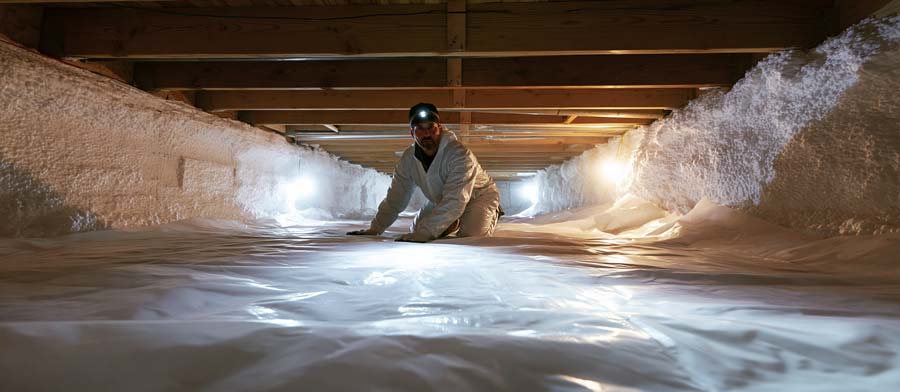
Seal What's Under the House and Everything Above It Gets Better
Cleveland Spray Foam Company turns vented, dirt-floored crawl spaces into sealed, dry, insulated parts of the house they sit under. Crawl space encapsulation is a complete system, not a single product, and every piece has a job:
- A heavy crawl space vapor barrier across the ground and up the walls, cutting off the moisture that rises out of the soil all year
- Closed-cell foam on the foundation walls, bringing them to R-15 to R-25 performance while sealing air leaks in the same pass
- Sealed vents and penetrations, closing the openings that let humid summer air and winter cold pour in
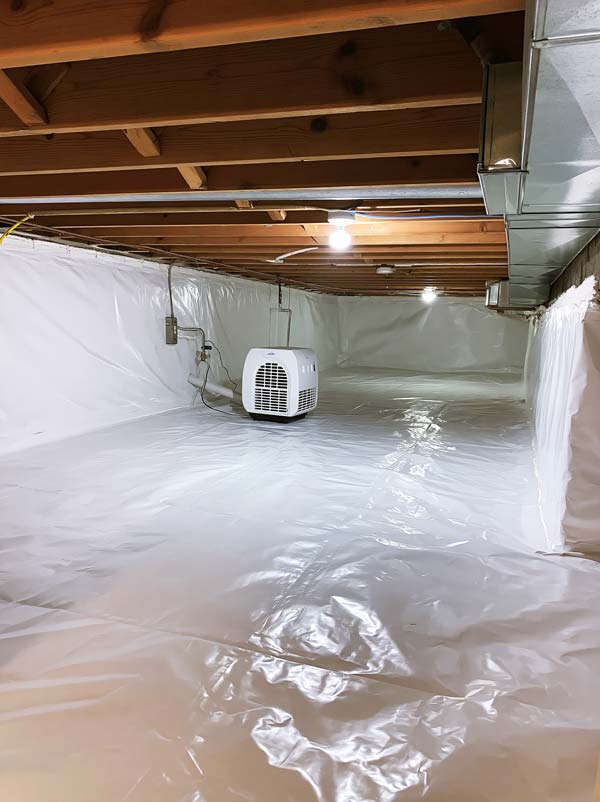
- Managed air, with a dehumidifier or a supply of conditioned air keeping the space dry for good
Why vented crawl spaces fail in Cleveland
Vents were supposed to dry crawl spaces out, and in a dry climate they might. Here, Lake Erie keeps humidity elevated all year, so summer vents pull in moist air that condenses on cool block walls, water lines, and framing. Then spring thaw loads the soil with meltwater from below. The result is the crawl space most Cleveland homeowners already know: damp soil, clammy air, rusting ducts, and fiberglass batts hanging from the joists in wet, useless sheets.
Insulate the walls, not the floor
Encapsulation moves the thermal boundary from the floor above you to the foundation walls around you. That single change is why the results reach upstairs: floors get warm because the space below them is no longer freezing, pipes and ducts land inside the protected envelope, and the batts that were falling out of the joists are replaced by rigid foam that bonds to the block and never sags. Because air in a house moves from the bottom up, a meaningful share of what you breathe on the first floor rises out of the crawl space, and sealing it is as much an air quality upgrade as an energy one.
Signs Your Crawl Space Is Overdue for Encapsulation
✓ A musty smell on the first floor that never fully leaves
✓ Cold floors over the crawl space every winter
✓ Fiberglass hanging or fallen from the floor joists
✓ Damp soil, condensation, or puddles after spring thaw
✓ Pests and rodents finding their way in through the vents
✓ Sticky summer humidity upstairs that the AC can’t tame
The House Breathes From the Bottom Up
Air inside a home rises, which means the crawl space is upstream of every room you live in. Whatever is in that air, from moisture to must to whatever the pests left behind, gets carried up through the floor and into the house. Encapsulation puts the entire space behind a sealed barrier, so what rises is clean, dry air instead.
It also turns dead space into usable space. A sealed, lined, lit crawl space stores what a damp one would ruin, and the materials are built for the long haul: the liner and foam are permanent installations, not maintenance items.
What changes when the crawl space is sealed
01 Musty first-floor air becomes clean, dry air
02 Cold winter floors become warm underfoot
03 Damp soil and condensation become a lined, dry space
04 Sagging joist batts become rigid foam on the walls
05 An open pest entryway becomes a closed, protected space
Your Crawl Space Encapsulation Questions Answered
It depends on the square footage, the height of the space, the condition it’s in, and what has to happen first, like removing fallen insulation or resolving standing water. Because those variables swing widely from house to house, we give a firm price after an inspection rather than a range over the phone, and the estimate is always free. It’s a significant project, but it’s also one of the highest-value upgrades in this climate because it fixes energy loss, moisture, air quality, and pest entry in a single job.
For most Cleveland homes with a vented crawl space, yes, and the case gets stronger the older the house is. You get warmer floors, lower energy use, protected pipes and ducts, an end to the musty smell, and a moisture problem solved at the source instead of managed forever. Unlike many home upgrades, it also compounds: every system that touches the crawl space, from HVAC to plumbing to the floor structure itself, lives longer in a dry space than a damp one.
A vapor barrier on the ground is one component; encapsulation is the whole system. A liner alone slows moisture rising from the soil but does nothing about humid air pouring through the vents, uninsulated block walls, or air leaking up into the house. Full encapsulation seals the vents, runs the liner across the floor and up the walls, adds closed-cell spray foam insulation to the walls, and manages the air in the sealed space. That’s why a $200 roll of plastic and a finished encapsulation deliver such different results.
Two honest ones. First, it’s an investment, and cutting corners on it, like lining the floor but skipping the walls and vents, tends to waste the money. Second, encapsulation is not a fix for bulk water: if the space floods or takes standing water after storms, drainage or a sump has to be addressed first, and we’ll tell you that at the inspection rather than sealing a problem inside. Homes with combustion appliances in the crawl space also need their venting evaluated as part of the design, which we handle in the spec.
Generally no. Insurers treat encapsulation as a home improvement rather than a covered repair, the same way they treat new insulation or a new roof installed by choice. Where it earns its keep with insurance is prevention: sealed, dry crawl spaces are far less likely to produce the mold, rot, and burst-pipe claims that make policies expensive. Some homeowners also find it helps at resale, since a lined, insulated crawl space photographs like a feature instead of a liability.
Usually, yes, and it’s a feature of the design rather than a shortcoming. Once the space is sealed, a small crawl-space-rated dehumidifier or a modest supply of conditioned air from the HVAC system keeps humidity in the safe range year-round. The difference from before is scale: instead of fighting the entire outdoors through open vents, the unit is maintaining a small, sealed, insulated volume, which it does easily and cheaply.
Yes, and in Cleveland that’s the normal starting condition, not the exception. Fallen batts, damp cardboard, construction scrap, and rodent contamination all come out before the liner goes down, because sealing debris inside a clean system defeats the point. We fold that work into the project through our insulation removal service, so the space is cleared, treated if needed, and ready for the liner in one continuous job.
Get Your FREE Estimate
Tell us what it’s like down there, or as much of it as you know. We’ll get back to you the same day whenever we can.